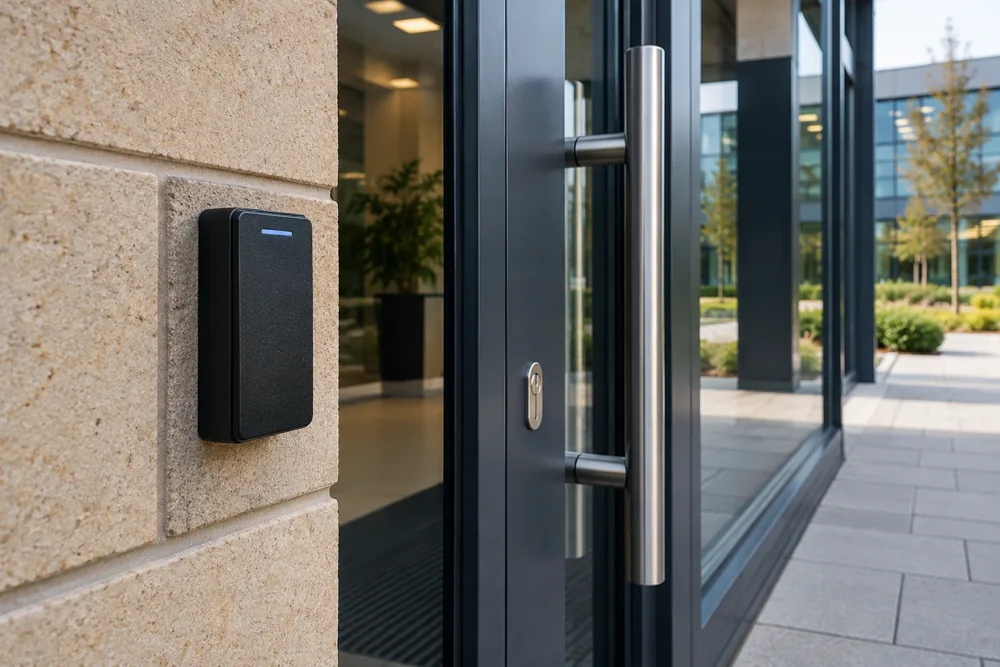
Define The Doors And The People
Access control starts with a permissions plan. Identify who needs to use each door, at what times and under whose authority. Employees, cleaners, contractors and visitors may need very different access. A simple entrance reader can become difficult to manage if those rules are not agreed before installation.
List the spaces that need separate protection, such as server rooms, stock areas and management offices. Decide whether the aim is to prevent unauthorised entry, record access events or support a reception procedure. Those outcomes influence the type of reader, controller and software required.
Cards, Fobs And Mobile Credentials
Cards and fobs can be issued and cancelled individually, avoiding the need to change a shared code whenever someone leaves. Credential technology matters as much as the reader housing. Ask how credentials are protected against copying and how the system handles lost, borrowed or expired passes.
Mobile credentials can suit some organisations, but they bring licensing, device and support questions. Check whether users need personal phones, what happens with a flat battery and how temporary workers receive access. Choose the method your staff can administer consistently rather than the option with the longest feature list.
Door Hardware And Safe Escape
A reader alone does not secure a doorway. The lock, door frame, hinges, closer and latch must work together. A door that fails to close reliably can remain insecure even when the software shows it as locked. The survey should inspect the physical condition of each opening.
Security must preserve safe escape. The Regulatory Reform (Fire Safety) Order 2005 places duties on the responsible person, and the access arrangement should be reviewed alongside the fire risk assessment. Emergency release, fire alarm interfaces and behaviour during power failure must be specified for the individual door.
Design And Installation Sequence
Begin with a door schedule and a discussion with the facilities and fire safety contacts. Check power, network connections, cable routes and any landlord restrictions. Agree whether the system needs to keep operating if a network link is lost, and identify the person who will maintain user records.
Installation is followed by tests of authorised and denied access, door closure, held-open warnings where provided and the agreed emergency arrangements. Coordinate interface testing with the responsible contractors. Handover should include administrator training, the door schedule, credential issue rules and clear instructions for revoking access.
Standards, Records And System Ownership
NSI describes NCP 109 as its code of practice for electronic access control design, installation, commissioning and maintenance. Its guidance also explains why safe escape and door compatibility need careful consideration. Refer to NSI guidance on access control and safe escape when discussing the specification.
Access logs can identify individuals, so UK GDPR considerations extend beyond CCTV. Restrict administrator rights, decide how long events are needed and explain the purpose to staff. Biometrics introduce extra obligations and should not be treated as a routine replacement for cards or fobs.
Costs And Future Changes
Access control cost depends on the number and condition of doors, chosen locks, credential technology, cabling and software. Integration with other systems can add configuration and testing work. Cloud platforms may carry recurring fees, so request the ongoing licence and support terms alongside the installation proposal.
Future expansion should be discussed early. A system for one entrance may later need to cover several buildings or tenants. Ask about controller capacity, supported hardware, data export and what happens if you change maintenance provider. Keep ownership of administration accounts and retain the system documentation.
Connect Access With Visitor Management
An access-controlled entrance still needs a workable visitor procedure. Combine staff credentials with door entry systems where reception must verify callers before releasing a door. Consider delivery drivers, contractors with tools and users who need extra time to enter.
For sites in Wakefield and the surrounding district, send the number of doors, building use and main access problems with your enquiry. Do not include live access codes. A description of the desired change is enough to start the discussion.
Your Questions Answered
Can Lost Access Fobs Be Cancelled?
Lost access fobs can usually be cancelled individually on a managed system, provided each credential has been issued against an accurate user record. The process depends on the platform and administrator permissions. Ask for cancellation training at handover and agree who will remove access when employees or contractors leave.
Will Access Control Work During A Power Cut?
Access control during a power cut depends on the lock type, backup power and agreed escape strategy. Some doors release when power is lost, while other arrangements retain security with mechanical escape. The correct behaviour must be assessed for each door and tested, rather than selected as a single default for the whole building.