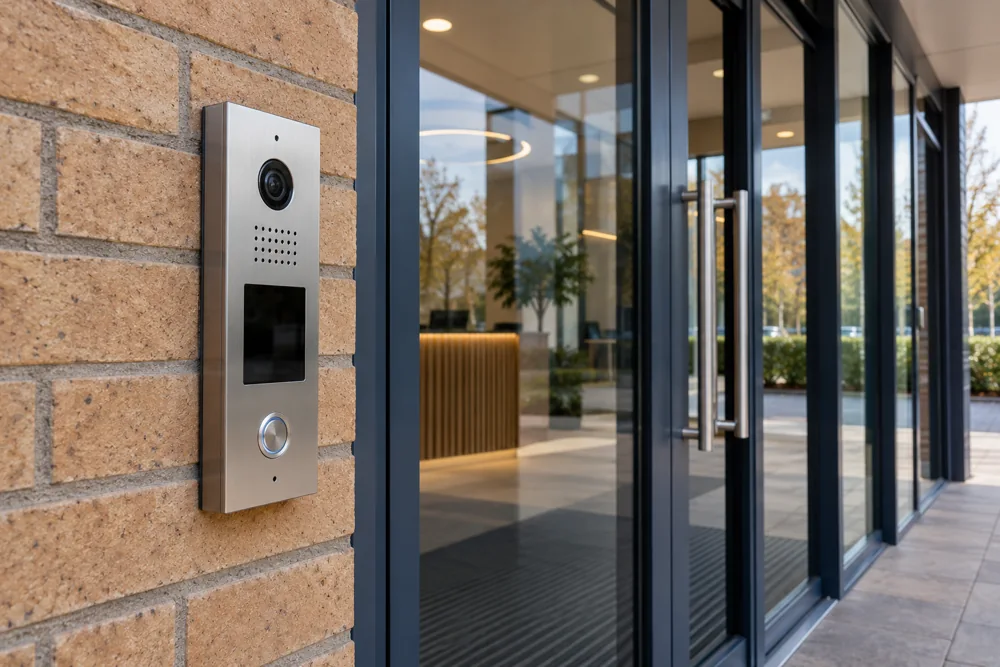
Decide How Visitors Reach You
A door entry system connects the person at an entrance with someone authorised to admit them. That may be a staffed reception, an office manager or several tenants sharing a building. Before choosing an intercom, map how visitors and deliveries arrive throughout the day.
A busy entrance needs different call handling from a rarely used service door. Consider simultaneous callers, missed calls and what happens during lunch breaks or shift changes. The equipment should support the actual staffing arrangements, with a clear fallback when the usual recipient is unavailable.
Audio, Video And Networked Options
Audio entry can suit a straightforward entrance where staff can verify callers through conversation and established procedures. Video entry adds a view of the caller, but its value depends on camera height, lighting and screen quality. Strong backlighting or a badly positioned panel can make identification difficult.
Networked intercoms can route calls to internal devices or approved applications. Review network permissions, licensing, connection reliability and ownership of the account. Avoid assuming that a mobile application provides continuous reception cover. Call routing still needs a named person and an agreed operating procedure.
Accessibility And Door Operation
Panel height, reachable controls, sound levels and visual feedback all influence usability. Consider callers using mobility aids and visitors with hearing or sight impairments. Where relevant, discuss the Equality Act 2010 and access guidance with the building team so the entrance can be used by the people expected to visit.
Door release must work with the existing door and preserve escape. Electric locking, closers and any automatic opening equipment need to be assessed together. A release signal that unlocks the door without allowing enough time to enter can leave visitors struggling or encourage staff to prop the entrance open.
Survey, Fit And Test
The initial survey should inspect the panel position, internal answering locations, cable routes, power and network connections. For shared commercial buildings, confirm who may approve changes and whether tenants need separate call destinations. Record any requirement for name directories without exposing unnecessary personal details.
After installation, test speech in both directions, image quality where fitted, call routing and authorised door release. Check the entrance from the caller’s position as well as the desk. Testing should include an unanswered call, a connection fault and the agreed out-of-hours arrangement.
Fire Safety And Privacy
The Regulatory Reform (Fire Safety) Order 2005 is relevant when door entry controls locking on an escape route. The responsible person should coordinate the arrangement with the fire risk assessment. Government fire safety guidance for offices and shops explains the distinction between controlling entry and preventing escape.
If the system records identifiable visitors, UK GDPR and the Data Protection Act 2018 need consideration. Decide whether recording is needed at all, who can access it and how long it is retained. Live video, recordings and stored call events should be covered by the appropriate privacy information.
What Changes The Price
The number of entrances and answering points is a main cost driver. Existing cable quality, trenching for a remote gate, network work and changes to door hardware can all affect the quote. Video, recording and mobile call functions may also introduce equipment or recurring licence costs.
Ask for a written scope explaining the included devices, cable routes, door release work and training. Separate a repair to an existing intercom from a full replacement proposal. Where obsolete equipment is involved, check future support and replacement availability before extending it.
Coordinate Staff And Visitor Access
A door entry intercom is most useful when it sits within a consistent entrance procedure. Staff may use access control credentials, while visitors speak to reception. Camera coverage can provide context without turning every visitor interaction into a recording requirement.
Tell us the location, building type, number of tenants and current call-handling problem. Mention whether there is an existing intercom, electric lock or vehicle gate. We can then discuss a suitable starting scope for your commercial premises in Wakefield or a nearby district.
Your Questions Answered
Can One Intercom Call Several Offices?
One door entry intercom can call several offices if the chosen system supports multiple destinations and the network or cabling is suitable. Shared premises need an agreed directory, administrator and method for updating tenants. Discuss privacy, licence costs and the fallback when a particular office does not answer before selecting equipment.
Can Door Entry Connect To A Gate?
Door entry can connect to a commercial gate when the intercom and gate controller have compatible interfaces. The release signal must not bypass the gate’s safety protections. A competent gate specialist should assess the interface, and testing should cover normal entry, faults and the agreed procedure when visitors cannot get through.